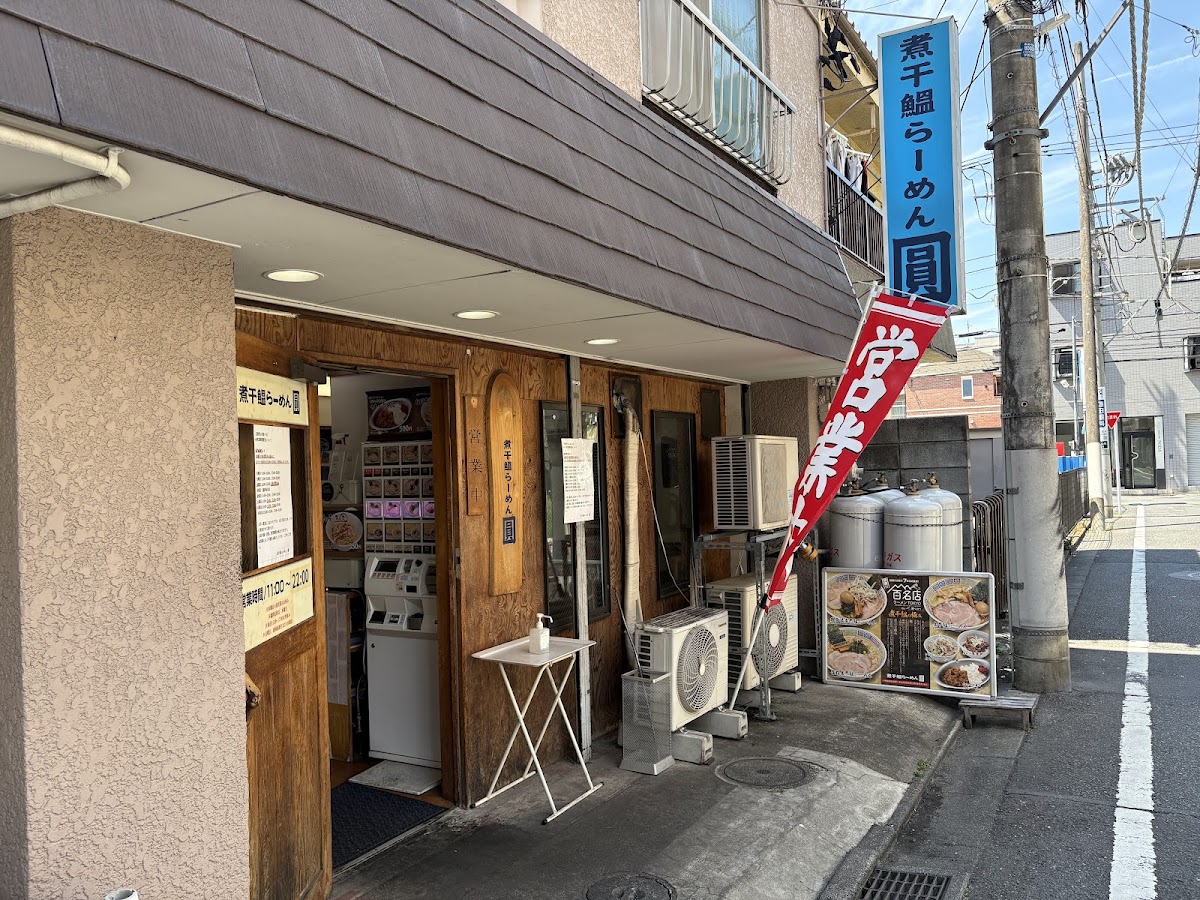
I've avoided going to ramen restaurants in Japan until now, whether it be because of the massive lineups, or the daunting prepay ticket system. It's been years since I've used one of those, and I didn't want to slow up the hungry customers behind me. Well, this time was different. I saw this highlighted on Google Maps, and the name made me chuckle. I decided to try it. I went early for dinner on a Friday, and ordered the chef's recommendation. I also had a choice of two add-ons, and I chose menma. I meant to get the other one. Like I said, it's been a few years... No matter, this special came with pretty much every topping anyway. The noodles were a little different than what I was expecting. They seemed more similar to soba than to ramen, but I'm not complaining. I think my chopsticks might have been slightly warped because there was some difficulty. More customers started flowing in, so I quietly finished my noodles and left. I didn't drink the soup because my ex-wife told me that was a no-no in Japan. I asked back at the hotel, and they said it's a matter of personal preference. I did have a sip, and it was bitter. That's when I realized that Dried Sardine was more than just a name... It was the soup base! I can definitely see myself coming here again, and the ticket machine will be nothing to worry about.
Overview
The first thing you notice when you step into Dried Sardine Ramen En is the aroma. It’s deep, briny, and comforting in a way that instantly signals this place takes broth seriously. Tucked away at 21-21 Yokoyamacho, Hachioji, Tokyo 192-0081, Japan, the diner has a quiet confidence that feels very local. No flashy décor, no gimmicks-just a counter, a small menu, and a steady rhythm of regulars who clearly know what they’re here for.
I first visited on a rainy weekday afternoon, the kind of day when ramen feels less like a meal and more like therapy. The staff moved with calm precision, and within minutes a bowl arrived that explained the reputation better than any review ever could. The broth is built on dried sardines, known in Japan as niboshi, and it delivers an intense umami hit without tipping into bitterness. According to culinary research from the Japanese Culinary Academy, niboshi-based stocks require precise temperature control to avoid harsh flavors, and you can taste that technical care here.
The process is fascinating in its simplicity. High-quality dried sardines are gently simmered, not boiled aggressively, allowing amino acids like inosinate to develop fully. Studies published by the Food and Agriculture Organization note that sardines are naturally rich in omega-3 fatty acids and protein, which partly explains why the broth feels both light and nourishing. What stands out is how clean the finish is. You get depth, but you’re not weighed down after the meal.
The menu is focused, which is usually a good sign. A classic sardine ramen anchors the lineup, joined by variations with soy-based tare, extra-rich options, and well-balanced tsukemen for those who prefer dipping noodles. I watched a regular customize his bowl with extra noodles and a seasoned egg, and the staff handled it without missing a beat. That kind of flexibility suggests a kitchen that understands its craft inside and out.
Texture plays a big role here. The noodles are thin and straight, designed to cling to the broth, while toppings stay minimal. Chashu is sliced thin, almost delicate, so it complements rather than dominates. One of the cooks mentioned, almost offhand, that the goal is balance over intensity, a philosophy echoed by ramen expert Ivan Orkin in interviews about modern Tokyo ramen culture. The idea is not to overwhelm but to layer flavors so they unfold as you eat.
Reviews from local diners often highlight consistency, and that’s something I paid attention to on a second visit a few weeks later. The broth tasted identical in the best way possible. Consistency is hard in ramen, especially with fish-based stocks that can vary by batch, so this speaks to disciplined sourcing and preparation. The sardines themselves are likely selected by size and dryness level, a method commonly recommended by professional ramen associations in Japan.
Location-wise, Hachioji doesn’t see as many tourists as central Tokyo, which gives this spot an authentic neighborhood feel. Lunchtime can get busy, but turnover is smooth, and even first-timers are guided through the menu with patience. Prices are reasonable for the quality, another reason locals keep coming back.
To be fair, this style of ramen isn’t for everyone. If you’re sensitive to fish-forward flavors, the aroma alone might feel intense. That said, the kitchen clearly understands this and keeps bitterness in check. The result is refined rather than aggressive, a bowl that rewards slow eating and attention.
Eating here feels like participating in a specific slice of Tokyo ramen culture-one rooted in technique, restraint, and respect for ingredients. Every element, from the broth to the service, reflects a clear point of view, and that clarity is what makes the experience memorable.
Good to know
Service options
✓ Delivery ✓ Dine-inPopular for
✓ Lunch ✓ Dinner ✓ Solo diningAccessibility
✓ Wheelchair-accessible car park ✓ Wheelchair-accessible entrance ✓ Wheelchair-accessible seating ✓ Wheelchair-accessible toiletDining options
✓ Lunch ✓ Dinner ✓ Table serviceAmenities
✓ ToiletAtmosphere
✓ QuietCrowd
✓ Tourists ✓ University studentsPlanning
✓ Accepts reservationsPayments
✓ Cash only ✓ au PAY ✓ dBarai ✓ PayPay ✓ Rakuten Pay ✓ Transit IC cards ✓ V-MoneyParking
✓ Paid parking lotPhotos
Location
Reviews
A ramen shop that gives off a nostalgic vibe Chewy noodles and friendly service
As Tabelog ranked this place as the second place in Tokyo, I had to try. Since its location is a bit off of the center of the city, the place wasn't' so crowded, at least when we got there. I got the basic one as usual. It is well balanced and meat was very tender. The soup was simple and clean. Wish the noodles were thicker though.
small shop with limited seat available. the soup base is tasty and light. staff were friendly and better to go before rush hours to avoid the queue.
Impeccable service by the 2 chef. They do everything from serve, cook and even washing the dishes to greetings the customer from doorstep. No que in saturday morning. Place only can sit 6 ppl per time. Soup not too salty yet very rich in flavours. Thin noodles which i like. Go for the chicken and sardine combination.
From the moment we walked in we were greeted by 2 extremely courteous chefs. Google translator helped as they didn’t speak any English. Also helped us ensure we don’t over order as our kid could easily share from the 2 bowls we ordered. What a soul fulfilling hot ramen. Cooked al dente and perfect portion.
My husband and I are regulars of this hole-in-the-wall restaurant for a few years now since we live in Hachioji City where it is located. It’s a small, unassuming place that can only sit 6 diners. We were lucky when we went there tonight because there was no queue outside. We love their niboshi (dried sardine) ramen because it has a rich and flavorful taste. The noodles are cooked perfectly, not soggy. The staff are also very welcoming. It’s been cold recently so we will be frequenting this place to have our favorite ramen. Gochiaousamadeshita!